
A Lithuanian Pagan Song to a Sun Goddess
Whenever we move towards a time of ritual importance- a holiday or a marked change in the seasons, we often experience that mix of eagerness and frustration that comes with trying to engage with the old traditions. As we approach Midsummer, perhaps that tapestry of feelings is arising alongside familiar questions: Where are the old songs of fire, water, love and change at this moment of the sun’s great power?
Many of us want to connect with the relational, animist traditions kept by the people before us. And as we know, song, which has always forged a connective thread between humans and the world of spirits and deities, possesses a visceral power to help us re-engage with those practices. As we also know, in so many cases, we don’t get to know what most of those old relational songs were. But in some cultures, enough of the ancient songs remain that they can help to reignite animist practices in a powerful way.
This is true in Lithuania, a country that didn’t convert to Christianity until the 14th century, and whose traditional songs have been fiercely maintained in recent times, especially in the face of Soviet occupation. Lithuanian songs are diverse in structure and topic matter, and many are framed in an animist mindset. Beings of the natural world are referred to with intimate, affectionate terms, and the spirits of the moon, sun, and earth are frequently at the heart of the stories of the songs. Songs about the sun- a feminine deity called “Saulė,” or more affectionately, “Saulala”- are plentiful, and in contemporary Lithuanian pagan tradition, these songs are used to turn loving attention to Saulė on the Summer Solstice.
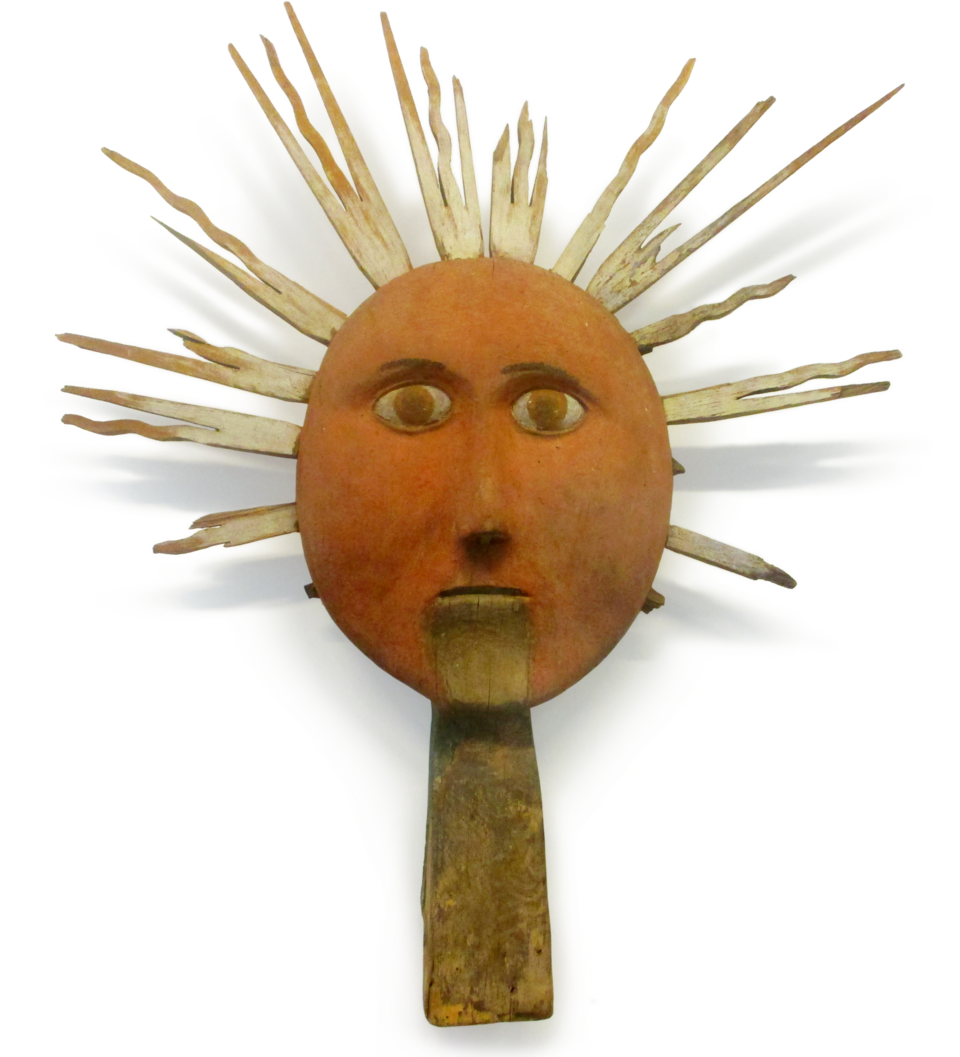
Above: An early 20th century depiction of Saulé from Palūšė, in Lithuania. Currently held at the National Museum of Lithuania.
“Nuslaide Saulala,” the song featured at the top of this post, is one of the common ritual songs of the summer solstice. “Nuslaide” is a sutartinė, a type of traditional, polyphonic song that creates a mesmerizing, trancelike effect for singers and listeners alike. The first line of “Nuslaide” translates as “The sun has set in the evening,” and subsequent verses in Lithuanian describe family members (fathers, mothers etc.) walking down the road and viewing Saulė as she lowers herself below the horizon. This particular version of the song- which is just a section of the full piece- has been adapted to help English-speakers understand the structure of sutartinės and to orient to the meaning of the lyrics. Our lyrics describe family members bowing down to the sun as she sets, a tradition that has been documented in Lithuania as far back as the middle ages.
On solstice eve in Lithuania, an annual gathering takes place on the historical site of Kernavė, a grouping of hill forts built in the middle ages. Amongst the many rituals that take place throughout the day and into the next morning, celebrants sit on the hillsides formed by the ancient forts and watch the sun set while singing “Nuslaide.” You can watch a lovely documentary about the Kernavė celebration here (listen to folks singing “Nuslaide” at about the 3 minute mark).
Singing a sutartinė like “Nuslaide” is a mesmerizing, trance-like experience, and it feels revelatory to speak one of the ancient, pagan names of the sun as we approach the moment of her zenith. I would love to teach you this song in my upcoming virtual weekend class: “Praise the Sun and Turn the Wheel: Midsummer Songs and Ceremony.”
Over solstice eve and solstice day, learn a delicious mix of traditional and new songs to connect you with Midsummer folkways.
We’ll learn folk songs and ballads from across Europe, with a healthy dose of modern chant mixed in! During our last session, we’ll finish our time together with some song-centered ritual for this special and timeless holiday.
You'll receive lyrics, recordings to non-English & layered songs, resources lists, and more! Learn more here.
