
Blossoms of Saint Columba: A Call-and-Response song for Saint John’s Wort at Midsummer/ Summer Solstice
As Midsummer approaches in the northern hemisphere, so many plants are eagerly emerging, spreading their pollen, and bearing their fruit. Here in southern Appalachia, we’ve been eating Juneberries, enjoying the first strawberries, and watching the blueberries develop. So many other herbs and edibles are out and about too- the poke is growing high, the sochan is big and bushy, and the goosefoot and mint are taking off! With so many edible, medicinal and fragrant plants strutting their stuff, it’s no wonder that the upcoming holiday of Midsummer has always been deeply connected to plant magic.
In Europe, one of the most common traditions on solstice eve and day has been to pick herbs and plants for medicinal and magical use. During this time, plants have been considered to be at the height of their potency, and thus extra effective for any uses we might make of them. One of the particularly beloved plants of Midsummer is St. John’s Wort. This plant gained its name from the fact that it often shows its yellow blossoms at the height of the summer season: Its yellow petals likely reminded people of the rays of the sun, thus connecting it with the feast day of Saint John the Baptist (June 24th)- a common day for Midsummer celebrations. Traditionally, the flowers of St. John's Wort are collected at Midsummer to be made into remedies and charms. Hanging this plant over doorways can help protect against malicious forces, and laying some under one’s pillow can bring blessings. Since the herb has protective properties, it’s often used in folk magic to develop a courageous heart and protect against heartbreak. This plant could be fortifying in some unusual ways too: In Tyrol, Ireland, there was a belief that if you picked the plant before sunrise and placed it in your shoes, you could walk as far as you wanted without tiring!
In parts of Scotland this plant has often been known by another name: the Armpit Package of Saint Columba, or St. Columba’s plant. Invocations to this plant are found in Gaelic cultural traditions from the Hebrides of Scotland. Here’s a sample:
The herb of St Columba,
unsought for, unasked for,
Fortunate is he who would get it,
I will cut (pluck) the foliage of prosperity,
as commanded by the high king
wherever it is put up
it will win victory and command homage
(trans. of the Gaelic Soc. of Inverness. Vol XVIII (1891)
The words “unsought for, unasked for” relate to the belief that, in order for the powers of the plant to work, one must not go searching for St. John’s Wort. Instead, one must happen upon it.
At the top of this post is a link to a pagan folk song of my own, created for St. John’s Wort and inspired by these Scots-Gaelic folk invocations from the Hebrides. Our words are:
Blossoms of Saint Columba
Plant of the joyful feast!
Guard me at the threshold
Bringer of sleep and ease
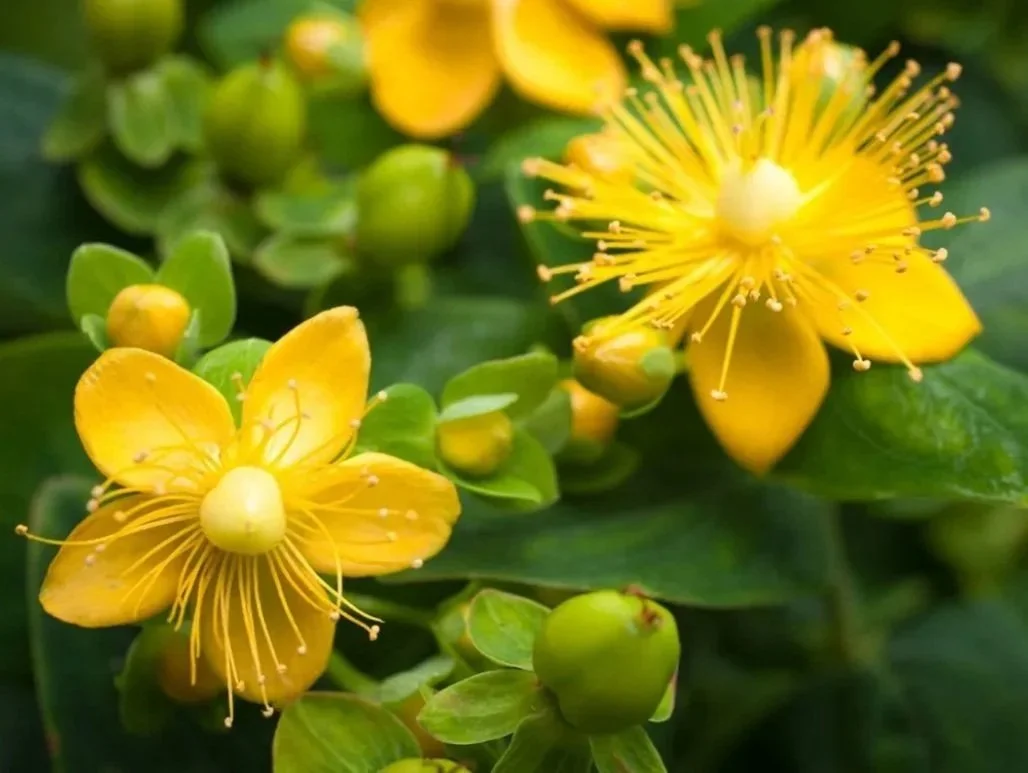
Above: The bright blossoms of St. John's wort. Image credit Alex Raths.
