
Some Foundational Facts of Midsummer/ Summer Solstice/ Saint John’s Day
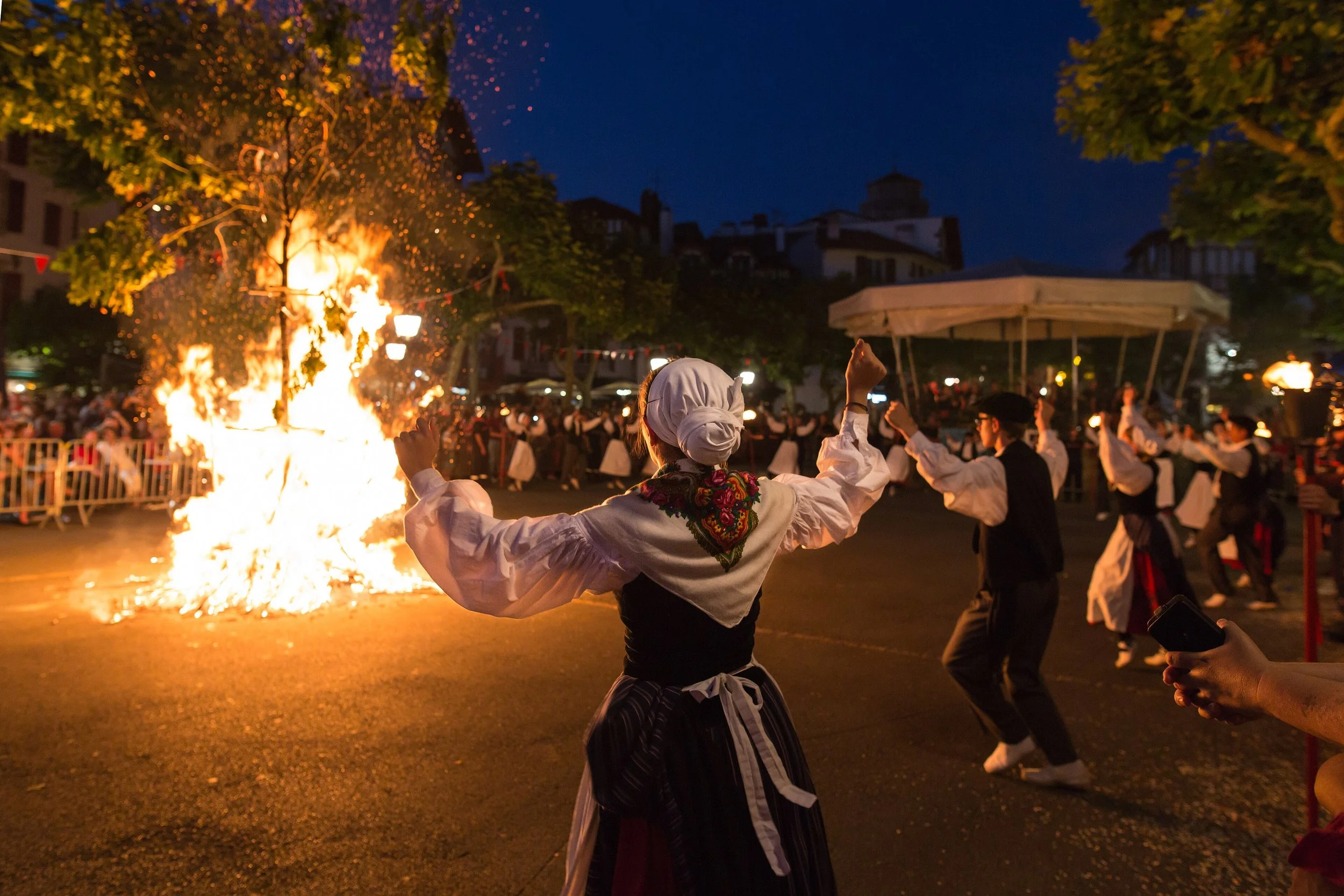
A Midsummer celebration in France, where the day is known as Fête de la Saint-Jean (St. John's Festival).
Midsummer, which takes place in just a couple of weeks in the Northern Hemisphere, is a holiday that’s been celebrated with enormous festivity across Europe since at least the early middle ages. Despite the lasting popularity of the summer solstice, many of us don’t have this holiday on our radar. It can be easy to miss, with all the busy plans and travels of summer, but additionally I’ve often found that, at least for practitioners in North America/Turtle Island, this is a holiday for which we tend to have less understanding and context. For those who observe the Wheel of the Year, the Irish holidays of Samhain, Imbolc and Bealtaine receive more attention, and Yule is easy to celebrate because of its alignment with other winter festivities. I have theories as to why these other holidays get more attention- which I won’t go into here, because that deserves another essay entirely- but I’m here to tell you that Midsummer is a holiday you WANT to be celebrating! This holiday has a unique, unbroken continuity of folk tradition, and observing this day unites us with the raised voices, folk magic and revelry of people from Estonia to Italy, and England to Ukraine.
I want to offer some foundational facts to help you understand this holiday:
֎ The summer solstice was important in varying degrees to neolithic peoples, but there is little evidence that pre-Romanized Germanic or Celtic cultures took special notice of this day. However, in the medieval period it emerged as a popular holiday- celebrated on the feast day of St. John the Baptist with bonfires, forms of divination, water rites, and more. It’s likely that these pre-Christian summer traditions aggregated on this popular feast day as Christianity became dominant.
֎ Perhaps one of the oldest known traditions associated with Midsummer is the rolling of a flaming wheel down hillsides and into rivers as a way to predict the fall harvest. This practice was first documented in 4th-century Aquitaine, France (though we don’t know at what time of year this took place) and nearly 1400 years later, the same tradition was documented in villages in England, taking place at Midsummer! Today it’s included in Midsummer rituals across Europe and Russia.
֎ In the 1970s, American scholar and Wiccan Aiden Kelly dubbed Midsummer as “Litha,” which is how it gained this title in the Wheel of the Year. “Litha” is derived from the Old English term “Líða,” which for the Anglo-Saxons was a name for the months of June or July.
֎ The sun is often revered at Midsummer, but other spirits and deities have become associated with this day. The Roman goddess Fortuna was celebrated on June 24th- and some scholars believe her holiday may have been celebrated by Romanized Celtic and Germanic peoples before the advent of Christianity. In Ireland, the being Áine (who has been seen as a sovereignty goddess and a queen of the Sídhe ), has been honored at Midsummer in Limerick since at least the 18th century.
Happy Celebrating!
